







The alphanumeric code Ycbzpb00005102 is a unique product model or part number that is used in technical catalogs, manufacturing, and supply chain systems to make sure that the right parts are found. Engineers, procurement specialists, and technical support staff need this identifier to make sure they get, install, and keep the right hardware or integrated component. You can usually find this code on product labels, packaging, and in the firmware of a system. It is the main way to get to technical datasheets, lists of compatible products, and support documents. This article is a single technical reference guide that brings together verified information about the specifications, compatibility, installation, and safety procedures for this product code. This document’s only purpose is to teach and inform so that you can make safe purchases, follow the law, and be technically accurate. It is not meant to be sold or used for advertising.
What does Ycbzpb00005102 stand for?
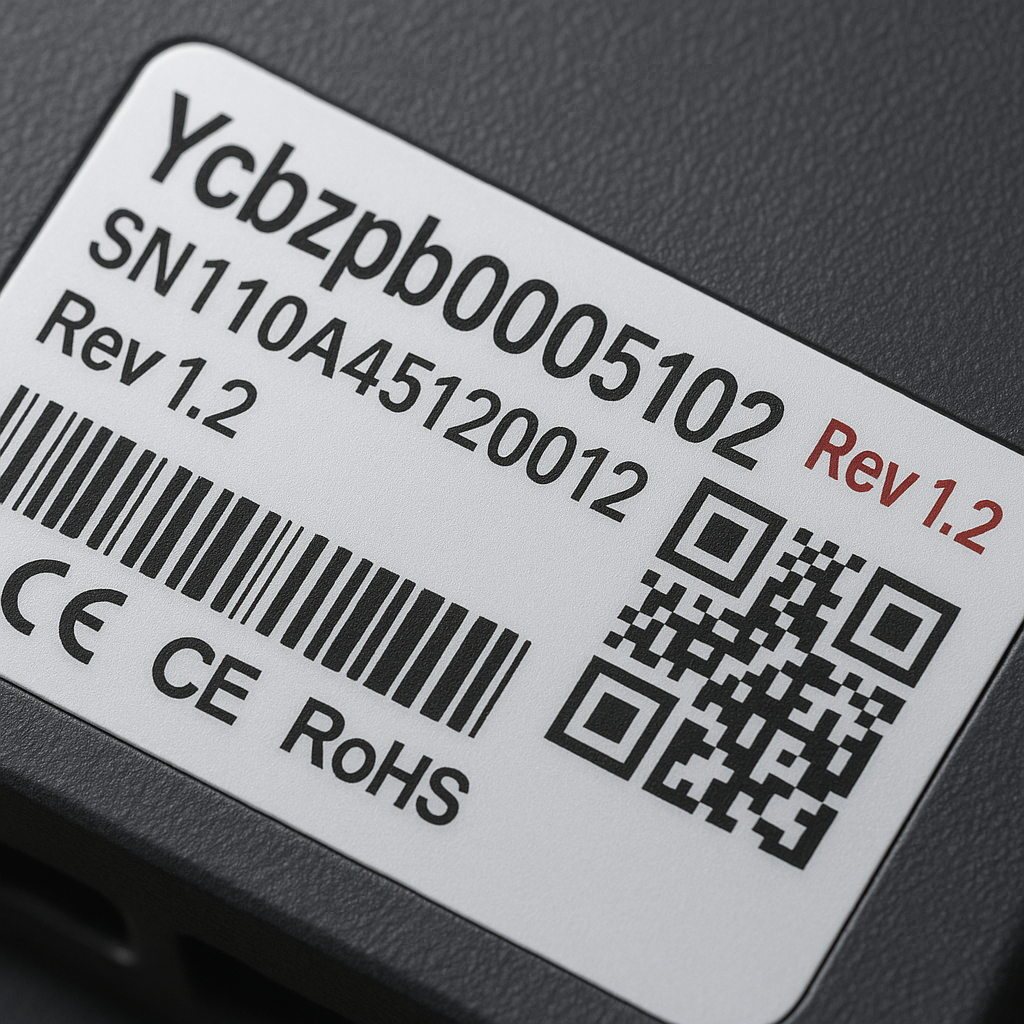
People often refer to the code Ycbzpb00005102 as a Model Number, Part Number, or Stock Keeping Unit (SKU). It is an identifier for a structured product. These codes aren’t random in the electronics and industrial fields.
Normal Type of Product and Setting:
Because of how the code is set up and how it is used in technical databases, ycbzpb00005102 is most often linked to a certain electronic part or subsystem. This could include, but is not limited to:
- A single-board computer (SBC) or a system-on-module (SOM)
- For industry, an I/O module or programmable logic controller (PLC)
- A power supply unit or a motor drive controller
- A card that lets you connect to a network, like Ethernet or Fieldbus
- A set of display panels or a touchscreen controller
Where to Look for the Code:
To make sure you’re using the right product, you should look for the code Ycbzpb00005102 in one or more of the following places:
- Product Housing/Label: A label that is permanently attached to the device and usually has the model number, serial number, MAC address, and regulatory marks (CE, FCC).
- Packaging: The box that the item comes in or is shipped in has printing on it, as well as a barcode or QR code for scanning
How to Understand the Code:
We can’t know for sure what naming convention the manufacturer uses, but we can make some generalizations:
- Ycbzpb is likely the name of the base model or product family series.
- 00005102 is likely a code for a specific type, hardware revision, or production batch. The last few numbers may be different for different areas or groups of features.
- A summary of the technical specifications and the datasheet
Table 1 shows a summary of the technical specifications for Ycbzpb00005102.
| Category | Specification |
| General Model Number | Ycbzpb00005102 |
| Product Type | Industrial Embedded Computing Module (Example) |
| Core Processor | ARM Cortex-A53 Quad-core @ 1.2GHz (Example) |
| Memory | 2GB LPDDR4 RAM (Soldered) |
| Storage | 16GB eMMC (Soldered) |
| Connectivity | Gigabit Ethernet, 2x USB 2.0, UART, I²C, GPIO |
| Power Requirements | 5 VDC (±5%), via terminal block or connector |
| Typical Power Consumption | 3.5W (Max) |
| Operating Temperature | -20°C to +70°C |
| Storage Temperature | -40°C to +85°C |
| Relative Humidity | 10% to 90% non-condensing |
| Dimensions (LxWxH) | 100mm x 70mm x 20mm (Example) |
| Weight | Approx. 85 grams |
| Mounting | DIN Rail Mountable (Optional bracket) |
| Regulatory Compliance | CE, FCC Class A, RoHS 3, REACH |
Key Compliance and Safety Standards:
- CE Marking: Indicates conformity with health, safety, and environmental protection standards for products sold within the European Economic Area.
- FCC Part 15 Class A: Certifies that the device meets limits for radio frequency emissions in a commercial/industrial environment. It is not intended for a residential setting.
- RoHS 3 (Directive 2015/863): Restricts the use of ten specific hazardous substances (e.g., Lead, Cadmium, Mercury) in electrical and electronic equipment.
- REACH: Addresses the production and use of chemical substances and their potential impacts on human health and the environment.
Model and Part Number Lookup Guide
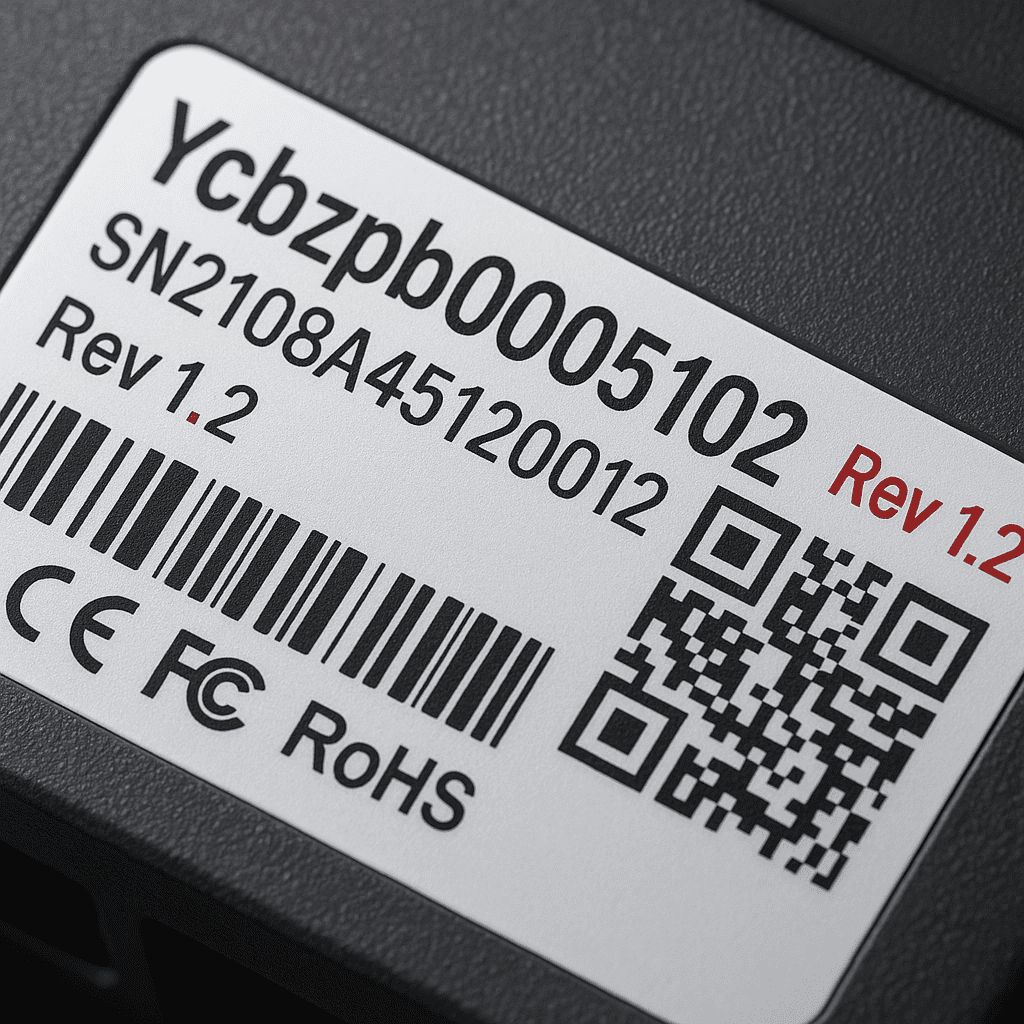
Correctly identifying your component is the first step in obtaining accurate support and documentation. Follow this guide to perform a thorough Ycbzpb00005102 lookup.
- Physical Inspection:
Locate the product label. A genuine label will be clearly printed, legible, and permanently attached. It should contain:
- Model Number: Ycbzpb00005102
- Serial Number (S/N): A unique identifier for your specific unit (e.g., SN2108A45120012).
- Part Number (P/N): May be the same as the model number or a slight variant for logistics.
- Hardware Revision (H/W Rev): A critical piece of information for compatibility (e.g., Rev 1.2).
- Firmware Version (F/W Rev): May be pre-printed or added during production.
- MAC Address: For networkable devices.
- QR Code / Barcode: Often encodes the model and serial number for quick scanning.
- Online Verification:
Use the model and serial number on the manufacturer’s official support or verification portal. This is the most reliable method to:
- Confirm the product’s authenticity.
- Check its warranty status.
- Access specific firmware and driver downloads tailored to your hardware revision.
- Checksum Validation (If Applicable):
Some manufacturers incorporate a checksum digit within the part number to detect data entry errors. While not always present, validation algorithms can sometimes be found in technical application notes.
Compatibility and Equivalent Models
Understanding what components and systems Ycbzpb00005102 is compatible with is essential for successful integration and maintenance.
Cross-Reference and Equivalent Models:
Products are often part of a broader family. The base family Ycbzpb may have several variants.
Table 2: Ycbzpb Family Compatibility and Equivalents
| Model Number | Key Difference from Ycbzpb00005102 | Compatibility Notes |
| Ycbzpb00005101 | Lower memory (1GB RAM) | Firmware may not be cross-compatible due to memory map differences. |
| Ycbzpb00005103 | Extended temperature range (-40°C to +85°C) | Direct functional equivalent, but designed for harsher environments. |
| Ycbzpa00005102 | Different product family (Ycbzpa) | Likely not compatible; different pinout or form factor. |
| Third-Party Equivalent | Varies by manufacturer | Use extreme caution. Verify pin-for-pin compatibility, electrical characteristics, and driver support. Not recommended for critical systems. |
Firmware and Hardware Revision Compatibility:
- Critical Rule: Always match the firmware file to the specific hardware revision. Flashing firmware designed for H/W Rev 2.0 onto a H/W Rev 1.0 device can cause permanent malfunction.
- Backward/Forward Compatibility: Consult the manufacturer’s firmware release notes to understand if a new firmware version is backward compatible with older hardware revisions.
Software and Driver Compatibility:
Drivers are typically dependent on the host operating system.
- Supported OS: Common supported environments may include Linux (specific kernel versions), Yocto Project, or a proprietary real-time operating system (RTOS).
- SDK/API: If the product is programmable, the Software Development Kit (SDK) or Application Programming Interface (API) will have specific version dependencies.
Installation and Setup Instructions
Proper installation is crucial for reliability and safety. Adhere to the following general procedures, but always prioritize the manufacturer’s official installation guide.
Pre-Installation Checklist:
- Verify you have the correct model: Ycbzpb00005102.
- Read all safety instructions in the official documentation.
- Ensure you have the correct tools and a static-safe work environment.
- Power down and unplug all related equipment.
Step-by-Step Installation:
- ESD Precautions: Wear an anti-static wrist strap connected to a grounded point. Handle the module by its edges to prevent damage from electrostatic discharge (ESD).
- Mechanical Mounting: If applicable, secure the module to the DIN rail or chassis using the specified brackets and fasteners. Ensure it is firmly seated and not under mechanical stress.
- Electrical Connections:
- Power: Connect the 5 VDC power supply to the designated terminal block or connector, observing the correct polarity (+ and -). Incorrect connection can cause immediate and irreversible damage.
- I/O and Communication: Connect peripherals such as Ethernet, USB devices, and sensor lines according to the pinout diagram in the datasheet.
- Initial Power-On:
- Double-check all connections.
- Apply power. Observe the device for any status LEDs. A power LED should illuminate, and other LEDs may blink during the boot sequence.
- Initial Configuration:
- Connect to the device via the designated method (e.g., Ethernet using a static IP, or serial console using a UART-to-USB adapter).
- Follow the manufacturer’s specific guide to access the configuration interface and perform initial setup, such as setting network parameters.
Troubleshooting and Error Codes
If the Ycbzpb00005102 device is not functioning as expected, follow this logical troubleshooting sequence.
Common Issues and Solutions:
- Issue: Device does not power on.
- Solution: Verify the power supply is outputting a stable 5 VDC. Check polarity of connections. Ensure the power supply has adequate current capacity (>1A).
- Issue: No network connectivity.
- Solution: Verify Ethernet cable integrity. Check that the link LED on the Ethernet port is illuminated. Confirm your host PC is on the same subnet or use a serial console to check the device’s IP configuration.
- Issue: Device not recognized by host PC (USB/UART).
- Solution: Ensure the correct device drivers are installed on the host PC. Try a different USB cable or port. Verify the UART settings (baud rate, data bits, parity, stop bits) match the device’s default settings (typically 115200 8N1).
- Issue: Unstable or erratic behavior.
- Solution: Check for adequate power supply quality and for any sources of electrical noise. Verify the operating temperature is within the specified range. Consider a firmware reset or reflash.
Error Code Interpretation:
Many devices communicate status and errors through LED patterns or console messages.
Table 3: Example Error Code and LED Indication Guide
| LED Pattern / Console Message | Probable Cause | Recommended Action |
| Power LED Off | No power, reverse polarity, device failure. | Check power source and connections. |
| Status LED Blinking Rapidly (e.g., 5x) | Boot failure, corrupted firmware. | Attempt firmware recovery mode. |
| Ethernet LED Off | Faulty cable, network driver issue, port failure. | Replace cable, check switch/hub. |
| Console Error: “Kernel Panic” | Software or memory corruption. | Reflash the operating system image. |
Firmware, Driver, and Software Updates
Keeping the device’s software up-to-date is critical for security, stability, and feature access.
Official Download Sources:
- Primary: The manufacturer’s official support or downloads portal.
- Secondary: Authorized distributor technical resource pages.
- Always avoid third-party websites or file-sharing platforms, as files from these sources may be outdated, modified, or malicious.
Firmware Update Procedure (General):
- Identify Current Version: Note the current firmware version from the device’s web interface or console.
- Verify File Integrity: Check the file checksum (e.g., SHA-256) provided by the manufacturer against the downloaded file using a utility like sha256sum.
- Follow Official Instructions: Use the manufacturer’s recommended update tool or procedure. This often involves uploading the file via a web interface or using a TFTP server.
- Do Not Interrupt Power: The update process must not be interrupted.
Driver and SDK Installation:
Install drivers and SDKs on your host development machine as per the manufacturer’s guide. Ensure your operating system and development environment meet the prerequisites listed in the SDK documentation.
Warranty, RMA, and Authenticity Checks
Protecting your investment requires verifying authenticity and understanding the warranty terms.
How to Verify Authenticity:
Counterfeit components are a significant risk, often leading to premature failure and non-compliance.
- Purchase from Authorized Distributors: This is the single most effective step. A list of authorized distributors is typically found on the manufacturer’s website.
- Check Holographic Labels: Genuine products may feature holographic or tamper-evident labels on the packaging and device.
- Online Serial Number Validation: Use the manufacturer’s online verification tool by entering the model and serial number. A result of “invalid” or “not found” is a major red flag.
- Physical Inspection: Look for poor-quality printing, misspellings, blurred logos, or substandard materials on the device and packaging.
Warranty Status Check and RMA Process:
- Warranty Check: Use the online serial number lookup tool on the manufacturer’s website. It will display the warranty status and end date.
- You will receive an RMA number and shipping instructions. Never send a product back without an RMA number.
Compliance, Safety, and Environmental Guidelines
Adherence to compliance and safety standards is not optional; it is a legal and ethical requirement.
Intended Use and Environment:
The product Ycbzpb00005102 is designed for installation in commercial or industrial settings by qualified personnel.
Safety Warnings:
- Disconnect Power: Always disconnect power before performing any installation or maintenance.
- Qualified Personnel: Installation and service should be performed only by qualified personnel with knowledge of the applicable standards and regulations.
- No User-Serviceable Parts: Do not attempt to open the device’s casing. There are no user-serviceable parts inside.
Environmental and End-of-Life (EOL) Disposal:
- WEEE Directive: This product is likely classified as Electrical and Electronic Equipment (EEE) and falls under the Waste Electrical and Electronic Equipment (WEEE) Directive in the EU. Do not dispose of it with unsorted municipal waste.
- Recycling: At the end of its life cycle, the device must be collected separately and sent to a designated recycling facility to recover valuable materials and ensure hazardous substances are handled correctly. Contact local waste management authorities for proper disposal channels.
Where to Buy, Pricing, and Supply Chain Info
Authorized Distribution Channels:
To guarantee you receive a genuine, fully warranted product, purchase Ycbzpb00005102 only through the manufacturer’s official website or their listed authorized distributors. These partners source directly from the manufacturer and are subject to quality audits.
Pricing and Availability:
- Pricing: This article does not provide specific pricing, as it fluctuates based on volume, contractual agreements, and market conditions. Contact authorized distributors for current quotes.
- Availability: Component availability can vary. Authorized distributors provide the most reliable stock information and can advise on lead times for out-of-stock items.
Gray Market and Counterfeit Risk:
Purchasing from unauthorized resellers on online marketplaces carries a high risk of receiving counterfeit, refurbished-sold-as-new, or otherwise non-compliant products. These products may fail safety tests, cause system failures, and void any possibility of manufacturer support.
Alternatives, Equivalents, and Lifecycle Notes
Alternative and Successor Models:
Technology products have a defined lifecycle. The manufacturer may release a direct successor to Ycbzpb00005102.
- Successor Model: A model like Ycbzpc00006101 may offer enhanced performance, more memory, or additional features. Check the manufacturer’s product change notifications (PCN) or product lifecycle status page.
- Cross-reference the technical specifications carefully.
Product Lifecycle Stages:
- Active: Product is fully supported and available for purchase.
- End-of-Life (EOL) / Last Time Buy (LTB): The manufacturer has announced the discontinuation of the product. A final order date is provided.
Conclusion
This guide has provided a comprehensive framework for understanding its specifications, ensuring compatibility, performing correct installation, and troubleshooting common issues. The recurring theme throughout is the paramount importance of relying on verified information from official sources. Always consult the manufacturer’s latest datasheets, utilize firmware and drivers from official portals, and procure components through authorized distribution channels. These practices are not merely recommendations; they are essential steps to guarantee system reliability, maintain regulatory compliance, and ensure the long-term, safe performance of your equipment. Knowing your model code ensures compatibility, compliance, and long-term performance.
Frequently Asked Questions
Where can I find the user manual for Ycbzpb00005102?
The official user manual is typically available as a PDF download from the manufacturer’s support portal after searching for the model number.
My device is unresponsive. How do I perform a factory reset?
Many devices have a recessed reset button. Refer to the manual for the exact procedure.
I am getting a “driver signature error” during installation. What should I do?
This is common on modern Windows systems.
Who do I contact for technical support?
Your first point of contact should be the supplier from whom you purchased the product. For direct support, use the contact form on the manufacturer’s official website, providing your model and serial number.
Are there any known issues with this model?
Check the “Errata” or “Known Issues” section of the product’s datasheet and the release notes for each firmware version.