






A major and widespread Cloudflare outage on Tuesday, November 18, caused problems for many websites, SaaS apps, and online services for about an hour. Around 11:20 UTC, the event caused a huge increase in user complaints on sites like Downdetector and social media. Users all over the world reported a series of errors. From inaccessible corporate dashboards to failing payment gateways, the service disruption highlighted the profound dependency of the modern digital ecosystem on a single infrastructure provider.
Cloudflare Outage: Early Signs
The Cloudflare service outage started quickly and was very bad. It was caused by a sudden failure in the company’s global network that made it impossible for user traffic to be routed correctly. It wasn’t just a simple server crash; it was a complicated network outage that messed up the main routing systems of Cloudflare’s big content delivery network.
The First Signs and the First Mistakes
People around the world started to notice problems before any official announcement was made. Platforms for tracking outages in real time, like Downdetector and ThousandEyes, saw a nearly vertical rise in the number of alerts. People trying to use different online services kept getting the same annoying HTTP status codes: 502 Bad Gateway, 503 Service Unavailable, and 504 Gateway Timeout errors.
The kinds of errors made it seem like there was a bigger problem with routing. It wasn’t that certain servers were down; it was that the complicated system that was supposed to intelligently send internet traffic to the closest and best server had a big problem.
Cloudflare’s First Diagnosis
Within minutes of the initial reports, Cloudflare’s engineering teams began an internal investigation. In early public updates shared through its status page and social media channels, the company said that a major network outage was affecting some parts of its CDN infrastructure. These updates showed that error rates were higher and service performance was worse in many areas, but they didn’t confirm a final root cause at that time.
At the time, Cloudflare did not say that a cyberattack or a hardware failure caused the incident. Even though people in the industry said that problems with routing can cause similar problems in big network outages, Cloudflare did not say which protocol was involved during the first response.
How the Outage Affected Services All Over the World?
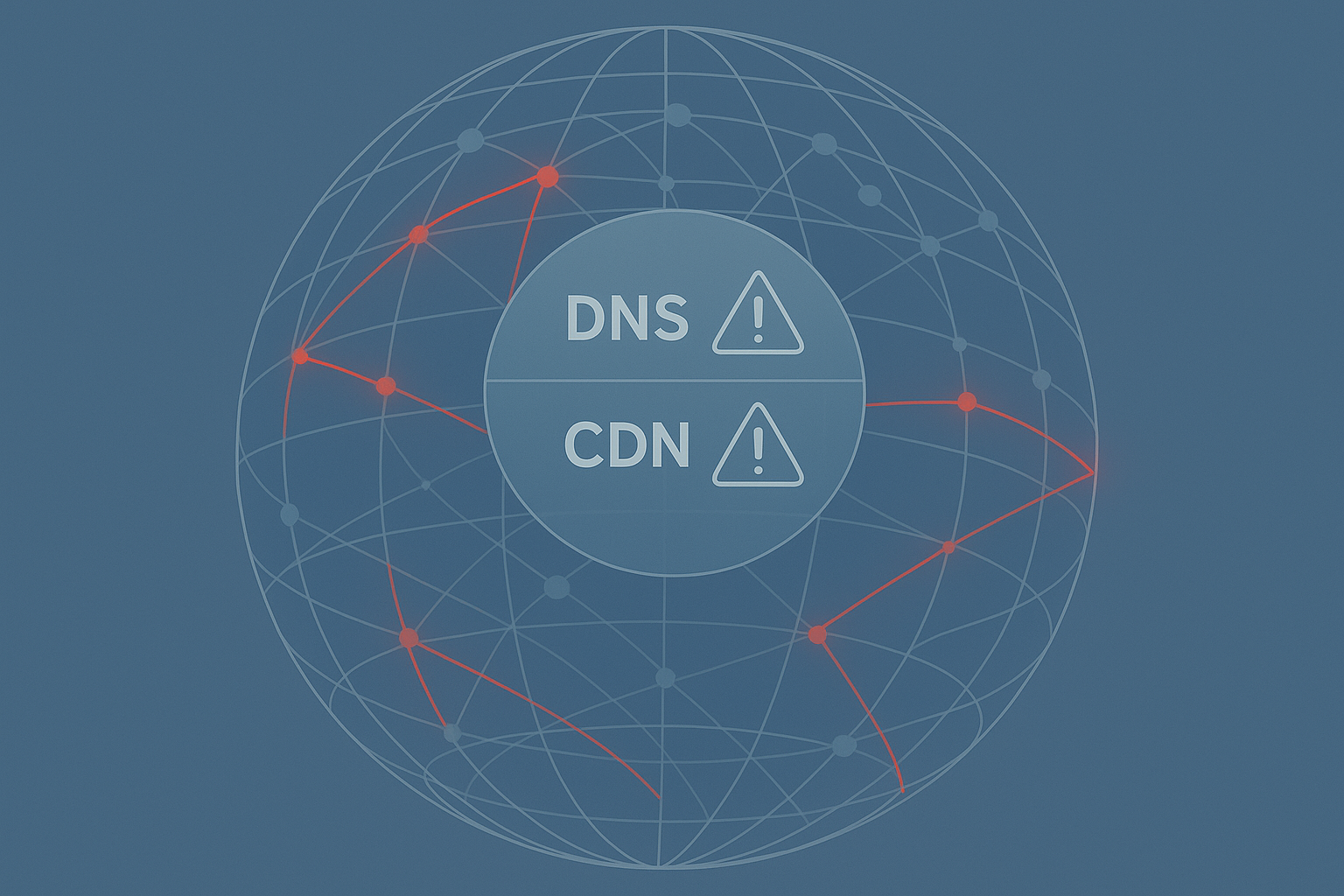
The Cloudflare outage showed how a problem with a core infrastructure provider can affect the whole digital world. Cloudflare is a CDN, a reverse proxy, and a security layer for millions of domains. Because of this, many services slowed down or, in some cases, became completely unavailable.
Affected Websites and Apps
The disruption affected more than one industry. Many websites and apps that use Cloudflare’s infrastructure had problems, such as being down or running slowly.
SaaS and Tools to Help You Get Things Done
A lot of well-known software-as-a-service platforms were either partially or completely down. Users said they couldn’t load workspaces, their logins got stuck, or their data didn’t sync in real time. These problems stopped work right away for both remote teams and businesses.
E-commerce and Financial Services
Online stores had problems with checkout because payment gateways timed out because of the Cloudflare API issue.
Media and Entertainment Platforms
Instead of showing media, news sites, content portals, and streaming services showed pages that said “error.” This was because Cloudflare’s CDN layer, which usually handles caching and delivering content quickly around the world, wasn’t working properly.
Services for Gaming
Several online gaming sites said that users couldn’t log in, sessions dropped, and latency went up. Because of these problems, players couldn’t get to their accounts or keep stable connections to game servers.
Enterprise Systems Inside
In addition to services that were available to the public, many companies had problems with their internal tools and employee-facing portals.
Interruptions in the flow of business
As services failed across layers, core business processes were directly affected.
Failed Logins
Authentication systems that relied on Cloudflare’s routing or security services stopped working, preventing employees and customers from accessing important platforms.
API Timeouts
Third-party integrations and microservices that used APIs started to fail all the time, which broke automated workflows and data pipelines.
Dashboard Inaccessibility
Administrative and analytics dashboards became unreachable, limiting visibility into system performance during the incident.
Worse Experience for Users
Even when some access was still available, performance dropped dramatically, making services almost unusable because of slow loading times and repeated timeouts.
What Users Went Through While the Service Was Down?
The outage caused a lot of confusion and anger among end users. The most common problems people reported were websites not loading, getting stuck in login loops, and getting HTTP errors like 502, 503, and 504 responses. Some users had to deal with CAPTCHA challenges that kept failing, while others saw their apps freeze because of DNS resolution issues or API timeouts that kept happening.
Cloudflare’s response and explanation after the incident. The company emphasized that the incident was not the result of a cyber-attack or hardware failure, but rather an internal operational issue under investigation.
Cloudflare’s First Reason
Cloudflare stated that engineers identified the problematic deployment shortly after the incident began and initiated a rollback process to restore normal traffic flow.
Actions to Reduce the Impact of an Incident and Help It Recover
To stop the problem from getting worse, Cloudflare rolled back the affected configuration and rerouted traffic to make the network more stable. Recovery was gradual rather than instantaneous, as changes needed time to propagate across global regions and network paths.
Public monitoring data showed that the number of errors was steadily going down as efforts to fix them took effect. Service availability came back slowly, not all at once.
Transparency and Operational Accountability
Cloudflare said that how they talked to each other and followed up on things was part of a bigger promise to be honest about how they do business. The company wanted to win back the trust of customers and the internet community after a major service outage by posting updates early, admitting to mistakes, and outlining specific steps to fix the problem.
What the Cloudflare Outage Means?
The Cloudflare outage showed how much the structure of the modern internet depends on each other. These kinds of events don’t happen very often, but they have a bigger effect because a small number of infrastructure providers are responsible for routing, securing, and speeding up global internet traffic.
What Cloudflare Does for the Global Internet Infrastructure?
Cloudflare operates as more than a traditional content delivery network. It serves as an important middle layer between users and origin servers, improving performance, enforcing security, and managing traffic on a large scale.
It serves as a reverse proxy that filters and routes traffic, runs a global CDN backbone that caches and delivers content, provides authoritative DNS services for customer domains, and offers security features like DDoS mitigation, web application firewalls, and bot management. These functions are important for millions of websites and services, so problems with Cloudflare’s network can affect many more than just one customer.
The Dependency Challenge in the Digital World Today
This event shows a bigger problem with dependencies that is common in today’s digital ecosystems. Many businesses have come together around a small number of infrastructure providers because they want to be more productive, do better work, and have better security. There are a lot of good things about this model, but it also poses a systemic risk.
A single misconfiguration or operational error at a critical hub can propagate globally, disrupting business operations, communication, and online commerce across multiple sectors simultaneously. These kinds of events keep the tech community talking about ways to make systems more resilient, such as using multiple providers, better failover design, and planning for partial infrastructure failure as a normal state rather than an exception.
A Bigger Lesson from the Global Cloudflare Outage
The Cloudflare outage that affected people all over the world was a harsh reminder of how fragile the internet is today. Cloudflare’s response and recovery efforts showed that they could handle pressure, but the incident showed that companies need to look at how dependent they are on others. When something this big happens, it usually changes how engineers, businesses, and policymakers think about internet risk for a long time.