


Cryptocurrencies are growing so quickly in Latin America that they will be a major target for complicated Latin America Crypto Scam 2025. Three main things are speeding up the use of cryptocurrencies in Latin America: a lot of people use messaging apps like WhatsApp and Telegram; more people are using stablecoins to send money across borders and protect themselves from inflation; and most people have mobile devices.
But the growth has also drawn smart criminals who plan their crimes in the area. These criminals think ahead and use things like economic problems, established digital trust, and holes in the law to their advantage. This report is a factual, journalistic look at how scams are going on right now in important LATAM countries. It talks about common methods, trends in different areas, and important ways to stay safe.
What the Numbers Say About Latin America Crypto Scam 2025
A Change Toward Fraud Using Deepfake and Social Engineering
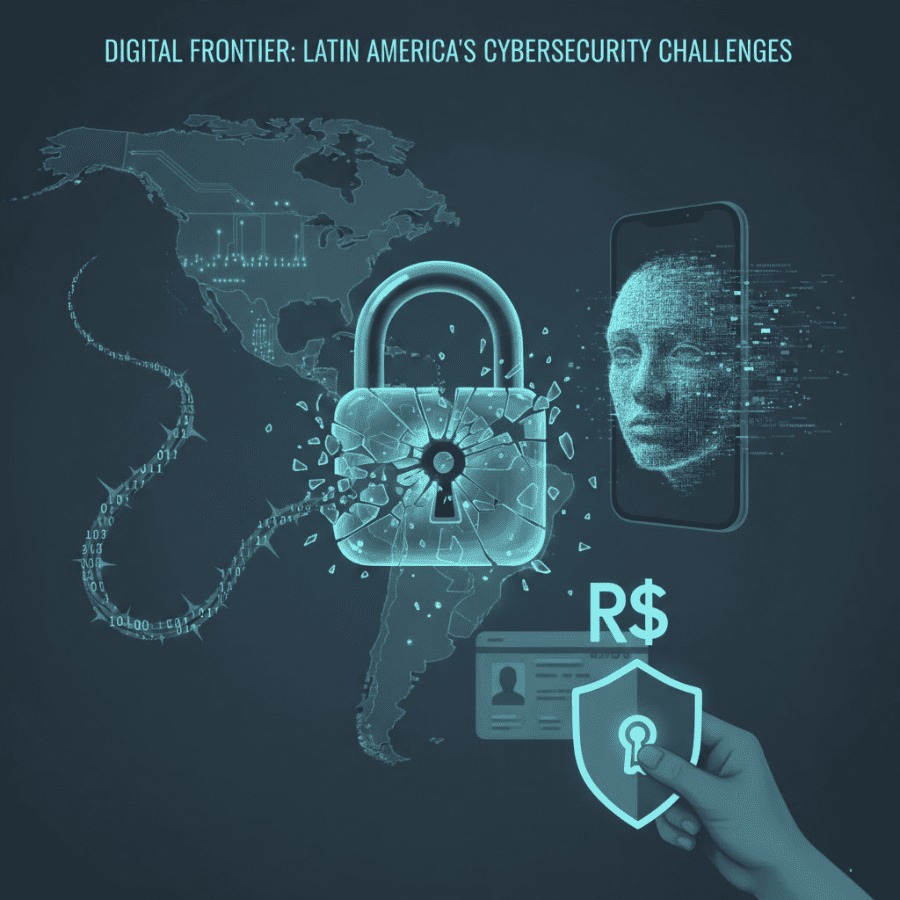
Regional cybersecurity observatories and blockchain analytics companies say that Latin America Crypto Scams 2025 have been getting worse. There are more and more big DeFi rug pulls happening all over the world. In LATAM, though, scams are more personal and use social engineering. Deepfake technology, the use of trusted platforms like WhatsApp, and the cover that legitimate peer-to-peer (P2P) crypto activity gives are all making this dangerous threat environment worse.
There are attacks that affect a lot of people, like phishing attacks, and attacks that target specific people.
The most recent Latin America Crypto Scams 2025 show this change by using less technical tricks and more advanced psychological manipulation. Fake investment platforms and schemes that involve butchering pigs are the main ways people lose money these days. In 2025, the numbers for crypto scams in Latin America show a clear shift from general phishing to attacks on specific people and small businesses. Because of this, the best way to protect yourself is now to teach and raise awareness in your community.
Brazil Has the Most Cases of Fraud in the World of Cryptocurrencies
Brazil has the most reported cases because it has the biggest economy and crypto market in the region. These are the most common crypto scams in Brazil in 2025:
Behaving Like an Exchange
Scammers use advanced phishing campaigns to fool people. These scams use fake customer service numbers and domains that look like real ones to get people to send money or steal their login information.
Pig Butchering Groups
Long-term romance or friendship scams are run by organized groups. They usually start by talking on social media or dating apps, then move to WhatsApp, and finally show the victims fake trading platforms.
Bots That Trade Fake Things Together
Many paid influencers on TikTok and YouTube talk about these scams. They say you’ll make money without having to do anything. People who have been hurt are told to download bad apps that either steal money directly or show fake profits that can’t be taken out.
Getting a Handle on WhatsApp
A threat that happens a lot. Scammers take over a victim’s WhatsApp account by sending them a verification code or switching SIM cards. Then they act like the victim and ask all of their friends for emergency crypto payments.
Fake Exchanges, USDT Scams, and SIM-swap Attacks in Mexico
Because of its location and economy, Mexico is a good place for Latin America Crypto Scam. Fake exchange app scams are one of the most common types of threats.
Apps That Seem Like Exchanges
Fake versions of real Mexican or international exchanges that look like them are bad mobile apps. People often get these apps from ads on social media or from fake ads that look like real listings in the Google and Apple App Stores. Once they are installed, they are supposed to take users’ private seed phrases and login information.
Websites for Investing in USDT
Scammers push “arbitrage” or “guaranteed yield” schemes just for USDT, which is appealing to people who want the dollar to stay stable. These are typical Ponzi schemes.
Attacks on SIM Swaps
Scammers can get around SMS-based two-factor authentication (2FA) on email and exchange accounts thanks to these attacks and identity theft. This often leads to horrible account takeovers.
How to Report Crypto Fraud to the Authorities in Mexico
If you find a scam, you should tell the UIF and the Policía Cibernética de la Ciudad de México, which is the cybercrime department in your state.
Argentina: Inflation and the Rise of High-Risk Crypto Scams
People are still willing to take risks and are desperate because the economy is not stable. Warnings about Argentina Crypto Scam 2025 often say:
Fake Presales and Tokens That Lose Value Quickly
Scammers set up local token projects that promise to protect people from inflation and use social media sites like X (Twitter) and Instagram to get people to buy them. A lot of the time, these kinds of projects end in rug pulls, which is when the developers leave and take all the money.
Staking Platforms That Aren’t Real
These platforms get people to sign up by promising to beat inflation with stablecoins like USDT or USDC that have annual percentage yields (APY) that are too high to be true, often 50% to 100% per month. It looks like the platforms are for business, but they’re really just for cheating.
Fake Exchanges on Phishing Sites
There are more phishing sites in Spanish now that more Argentines are using both international and local regulated exchanges (VASPs). These fake pages look exactly like real login pages so they can get people’s login information.
If you see a scam, tell the UFECI (Unidad Fiscal Especializada en Ciberdelincuencia) or the Policía Federal Argentina.
How to Use WhatsApp and Telegram to Steal Crypto from People in Colombia
Colombian organized crime groups will know how to deal with crypto investment scams by 2025. This is how they usually go about things:
Telegram Groups for Signals
People are tricked into joining private groups where “experts” tell them what to buy and sell. This is how the scam starts. After getting small, planned wins, users are told to switch to a proprietary platform to make them feel better about themselves. There, their bigger deposits are either taken right away or put in a safe.
WhatsApp’s Networks With Many Levels
People are now using cryptocurrency to rename old pyramid schemes. You have to put in USDT first to get into one of these scams. They say they will make money mostly by getting new members to join, which is a sign of a multi-level marketing (MLM) crypto scam.
Behaving Like a Government Agency
Sending fake legal notices that look like they came from DIAN, the Colombian tax authority, is a common trick. These fake messages say that someone has broken the law and want payment in cryptocurrency right away to settle the made-up charges.
If you are the victim, you should contact the Centro Cibernético Policial (CCP) or your state’s cybercrime department.
Chile: Crypto Scams That Work Like Pyramid Schemes and Multi-Level Marketing
Chile has a lot of banks, but that hasn’t stopped people from committing cryptocurrency fraud there. In 2025, the most common crypto pyramid schemes in Chile are digital versions of old scams that have been made better. Most of them are one of two types:
Crypto Schools for Learning
These websites sell expensive courses that promise to let you use a private trading platform. The operators don’t make most of their money from trading; instead, they make money by getting people to join their network. These are clearly scams that use multi-level marketing to sell crypto.
Groups That Mine for Fake
These scams tell people to invest in fake Bitcoin mining rigs or cloud-mining operations so that they can get the resources they need. They say they will pay out every day a lot. Investors who get in early might get small returns to build trust before the business fails, which it will.
If you fall for the scam, you should let the Brigada Investigadora del Cibercrimen (BRICIB) or the Servicio Nacional del Consumidor (SERNAC) know.
Cloud Mining and Crypto Mining Scams in Peru
Peru is still a big place for mining both real and fake cryptocurrencies. In Peru, there are two main ways that crypto mining scams happen:
Scams in the Market
Scammers sell brand-new, high-end ASIC miners on local online marketplaces like Facebook Marketplace and OLX for prices that are too good to be true. The seller disappears after the buyer sends a crypto deposit but doesn’t send the hardware.
Cloud-Mining Contracts That Are Not Real
There are websites that aren’t real that sell cloud mining contracts for hashpower. These platforms often show big daily returns at first to gain trust, but then they stop making payments and go out of business when they reach a certain amount of investor money.
If you find a scam, please let the División de Investigación de Delitos de Alta Tecnología (DIVINDAT) know. DIVINDAT looks into scams that happen on social media, like fake equipment sales, digital fraud, and cloud-mining scams.
Scams in Venezuela That Use Remittances and Stablecoins
Cryptocurrency is very popular in Venezuela, especially USDT for everyday purchases and sending money across borders. This has led to the rise of some types of fraud. The Venezuela crypto remittance scams of 2025 are a great match for this situation and come in many forms:
Scams on P2P Exchanges
Scammers pretend to be honest traders on local peer-to-peer (P2P) exchange forums. Sending fake screenshots of bank transfer confirmations or using stolen ID cards to make profiles that look “verified” are two common ways to take advantage of the fact that P2P trading is based on trust.
Scams for Investors Who Want to “Dollarize”
People who want a stable currency are the targets of these scams. They say they will turn bolivars that have lost value into a “dollar-backed” crypto portfolio, which makes it sound like they are safe from hyperinflation, but in the end, they take the money.
Doing Work for a Charity
Scammers pretend to be NGOs or government aid groups and then contact people who might be victims to offer them money or help with humanitarian issues. At the end of the scam, the person asks for a small “processing fee” in cryptocurrency to get the fake money back.
If you fall for a scam, let the Cuerpo de Investigaciones Científicas, Penales y Criminalísticas (CICPC) know.
On-Chain Clues: What Happens to LATAM Scam Money
On-chain analytics show a forensic map of illegal money that always has the same patterns in Latin America. Scammers often use cryptocurrency mixers or tumblers to hide their money before putting it into regional or global exchanges. This makes it harder for Virtual Asset Service Providers (VASPs) that follow the rules set by the LATAM Financial Action Task Force (FATF) to follow the Travel Rule. They now have to get and share information about the sender and receiver for bigger transactions.
This increased openness is meant to catch and stop flows that look fishy. There is still a big gap in enforcement for peer-to-peer (P2P) platforms that don’t follow the rules, though. These platforms still make it easy for people to buy and sell things across borders without anyone knowing who they are. This makes it hard for the police to do their jobs.
LATAM Safety Framework 2025: How to Keep Your Money Safe from Cryptocurrencies
You need a defense plan that is very strong and has many parts. This framework is based on the best cybersecurity practices and knowledge of the area:
Learning and Being Aware
Learn how social engineering works. You should know that no real bank, exchange, or government agency will ever contact you through WhatsApp or Telegram to offer you help or investment opportunities.
Strong Checking
Right away, switch to two-factor authentication (2FA) and don’t use SMS. FIDO2 security keys or passkeys are the best way to keep yourself safe from phishing. At the very least, you should download an app that checks your identity. Before you switch your SIM card, call your mobile carrier to get a port-out protection PIN or password.
Checking Strictly
Always type in exchange URLs by hand instead of clicking on links. You should know the name of the official developer before you download an app. You can check with your country’s regulator to see if an exchange is legal. For example, Brazil’s Banco Central do Brasil or Mexico’s CNBV.
Safe Keeping
Use a hardware wallet (cold storage) for large amounts of money. Don’t put your seed phrase in the cloud, digitize it, or tell anyone about it.
Doing Your Homework Before Investing
Watch out for deals that say you will definitely make money. You shouldn’t just look at an unverified PDF report for any token project. Make sure that well-known security companies did audits of the smart contracts. Make sure that the project’s money is not tied up in public.
Safety in Communication
You need to turn on DMARC, SPF, and DKIM for your email accounts to stop domain spoofing. If you get a QR code payment request that you didn’t ask for, be very careful. These are becoming more common as a way to steal information.
In 2025, the Rules and How They Are Enforced Will Change
Laws and rules in Latin America are quickly getting better at dealing with crimes that use digital currencies. Authorities are speeding up the updates to AML/KYC enforcement and putting new laws into effect. The rules for cryptocurrencies in Brazil and Argentina are now in effect. They require very strict VASP licensing. Under its current Fintech Law, Mexico is cracking down more on services that deal with crypto assets.
Police cybercrime units are also getting better at finding and connecting illegal transactions by learning more about on-chain analytics. The main goal of the strategy is to make it easier for agencies to work together, both in the country and between countries. One of the main goals of operations is to fully follow the FATF’s Travel Rule. This makes it easier to keep track of money that is moving across borders illegally.
Important Points
In 2025, the main thing that makes Latin American crypto scams different is how they use trust against people. They are doing this by using deepfake technology, acting like people on messaging apps, and playing mind games that are very advanced. Regulatory frameworks are getting stronger in all parts of the region, and police are using better tools. But these crimes are always unfair, so it’s up to users to be careful and take steps to keep themselves safe. It is no longer possible to make a culture of security that is widespread. The most important thing to do to make adoption safe is to do this.
Frequently Asked Questions
Q1: What is the most common crypto scam in Latin America right now?
In 2025, pig butchering will be the most common and bad for the economy, especially in Brazil, Mexico, and Colombia.
Q2: How can I tell if a crypto exchange app in Mexico or Brazil is a scam?
Always look into where the app came from. Check the developer’s name against the exchange’s official website, read reviews of the exchange on sites other than the app store, and make sure that your local financial regulator has given the exchange permission to operate.
Q3: If you lose crypto in a SIM swap attack, what should you do first?
Call your mobile carrier right away to get your phone number back. Change the passwords on all of your important accounts, like email and exchanges, and turn off SMS-based 2FA. Instead, use a security key or an authenticator app. After that, tell the local police’s cybercrime unit and the exchange where the theft happened.
Q4: Are there really deepfake crypto scams in LATAM?
Yes. In 2025, scams that use deepfake audio and video will be very common. Celebrities use them to make fake endorsements of scam tokens. Even worse, they use them to make emergency voice calls that sound like a family member to scare victims into sending crypto right away.
Q5: Can I get my money back if I send crypto to a scammer?
You usually can’t change a cryptocurrency transaction after it’s been made. It’s not common for someone to get better. The best thing you can do is call the police and tell them about the crime so they can look into it.